
Asos sells clothing, shoes, and accessories from third-party brands alongside its own lines. The site claims that all its products are authentic and come directly from the brands or authorized distributors.
However, the resale of Asos-branded items on secondary platforms like Vinted or on third-party sites muddles traceability. Buyers regularly report discrepancies between the expected product and the received product, sometimes related to logistical errors, sometimes to dubious resale channels.
Asos Tags and Packaging: What a Physical Examination Reveals
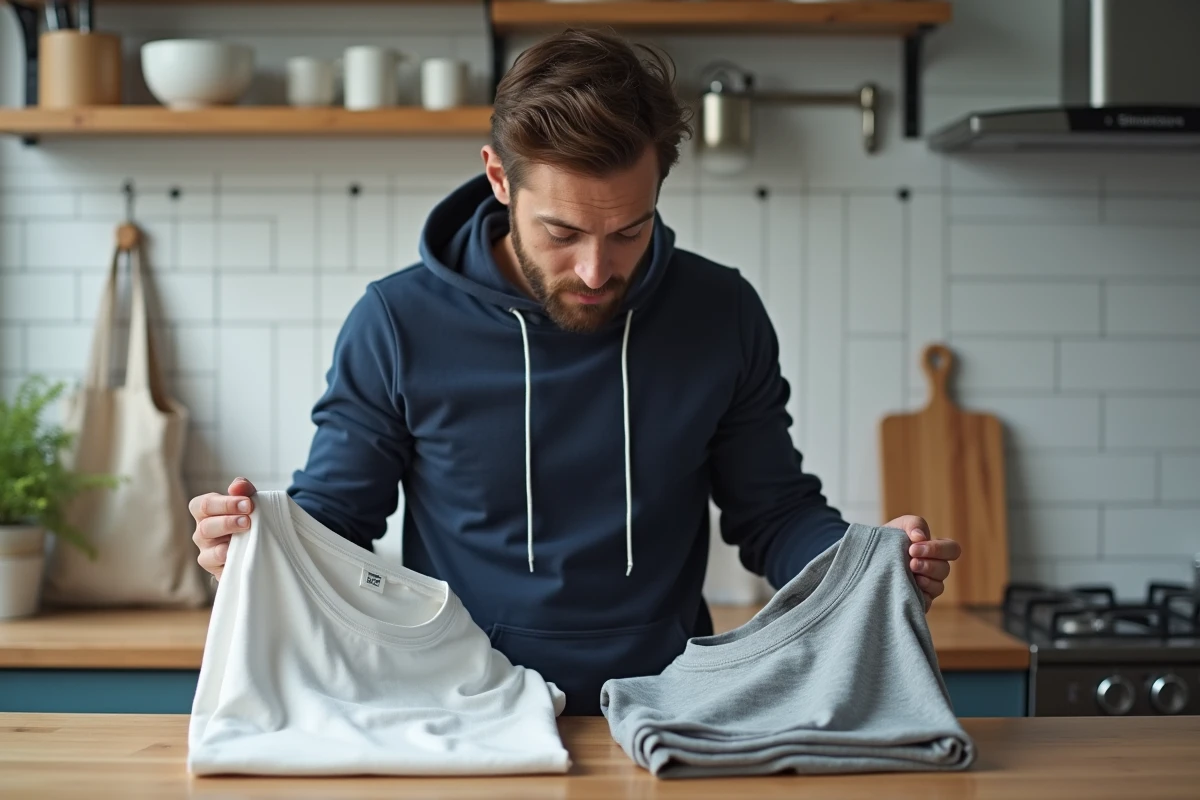
The first thing to inspect on an item purportedly from Asos is the inner label. Pieces from the platform’s own lines (Asos Design, Collusion, Reclaimed Vintage) carry a sewn composition label with mentions in several languages, a product reference number, and the country of manufacture. A poorly printed label, one that is glued instead of sewn, or one where the font varies from word to word indicates a problem.
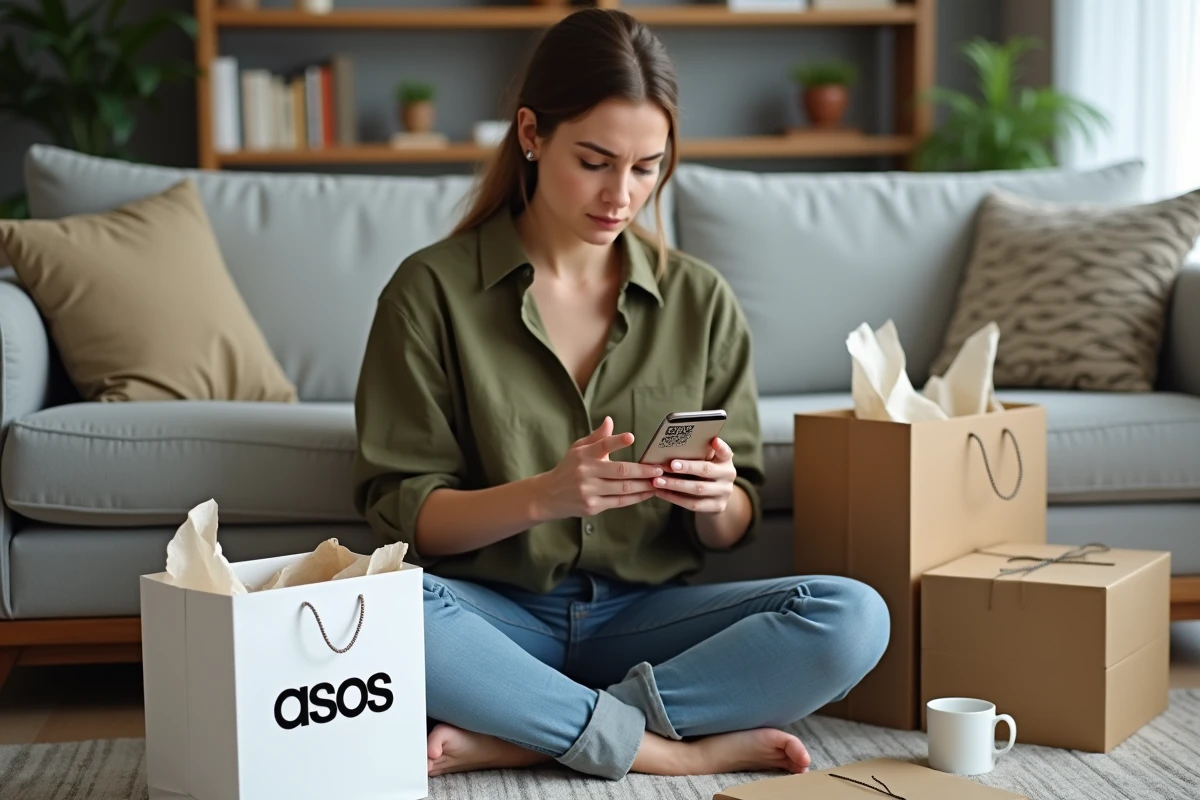
The shipping bag is another clue. Orders placed on the official site arrive in recycled packaging bearing the Asos logo, accompanied by a detailed delivery slip. The absence of this packaging is not necessarily a deal-breaker (a reseller may have thrown it away), but it prevents tracing the supply chain.
For those looking to find out how to tell if an Asos item is real or fake, comparing the product reference on the label with the online catalog remains the most reliable reflex. Each item sold on the site has a unique code that can be found in the product page URL.
Buying Asos Outside the Official Site: Risk Areas
The real area of confusion does not lie on asos.com itself, but on resale channels. An item purchased second-hand on a marketplace or through an unauthorized reseller loses its authenticity guarantee. Field returns vary on this point: some buyers receive perfectly compliant pieces, while others encounter crude copies sold under the name Asos Design.
Peer-to-Peer Resale Platforms
On Vinted or Leboncoin, the original proof of purchase remains the best guarantee of authenticity. A seller able to provide a screenshot of the Asos order confirmation (with order number and date) offers a level of traceability that a simple batch of photos cannot achieve.
Third-Party Sites Imitating Asos
Some sites reproduce Asos’s graphic charter, sometimes even down to the URL (with variations like “asos-outlet” or “asos-soldes”). Asos does not have a separate outlet site. Promotions occur exclusively through asos.com or the official app. Any alternative domain should be considered suspicious.
Quality of Stitching and Materials: Spotting Inconsistencies on Asos Clothing
Asos’s own lines are positioned in an accessible price segment. The quality of manufacturing reflects this positioning: the fabrics are functional without claiming to be high-end. A counterfeit sometimes reveals itself through an even more pronounced drop in quality.
- The stitching on an Asos Design item is consistent, with no visible loose threads. An irregular seam on a garment supposed to be new indicates either a counterfeit or a production defect not detected by quality control.
- Zippers usually bear the supplier’s brand (YKK on many pieces). A zipper without a brand or that gets stuck on first use deserves attention.
- Prints (logos, patterns) on an authentic item withstand the first washes. A logo that peels or comes off before the first machine wash is a clear signal.
The feel of the fabric remains an underestimated indicator. An abnormally rough polyester or a translucent cotton on a piece sold as “thick cotton” in the product description betrays an inconsistency between the official description and the physical reality.
Third-Party Brands Sold on Asos: A Special Case
Asos distributes brands like Nike, Adidas, The North Face, or Lacoste. For these items, the question of authenticity arises differently. The platform sources from the brands themselves or authorized wholesalers, making counterfeiting on the official site very unlikely.
The risk appears during resale. A buyer who acquires a Lacoste polo “purchased on Asos” via a third party cannot verify this claim without proof of purchase. The authentication techniques specific to each brand then take over: positioning of the crocodile for Lacoste, quality of the swoosh for Nike, texture of the fabric for The North Face.
The available data does not allow quantifying the share of counterfeits circulating under the label “purchased on Asos” in the secondary market. The absence of a digital authentication system integrated into Asos labels (unlike some luxury brands that use NFC chips) leaves a margin of uncertainty.
Concrete Reflexes Before Finalizing a Purchase
- Check that the site URL starts with “www.asos.com” and that the SSL certificate is valid (padlock in the address bar).
- Compare the displayed price with that of the official site: a price discrepancy that is too marked down, on an item presented as new, should raise alarms.
- Always request proof of purchase when buying second-hand, and cross-check the order number with Asos’s usual format.
- Prefer payment through platforms that offer buyer protection in case of disputes over authenticity.
No method guarantees absolute certainty outside the official circuit. The accumulation of consistent clues (label, packaging, proof of purchase, physical quality) allows reducing the risk without completely eliminating it. For third-party brands purchased on Asos and then resold, cross-referencing with the authentication criteria of the original brand remains the most solid approach.