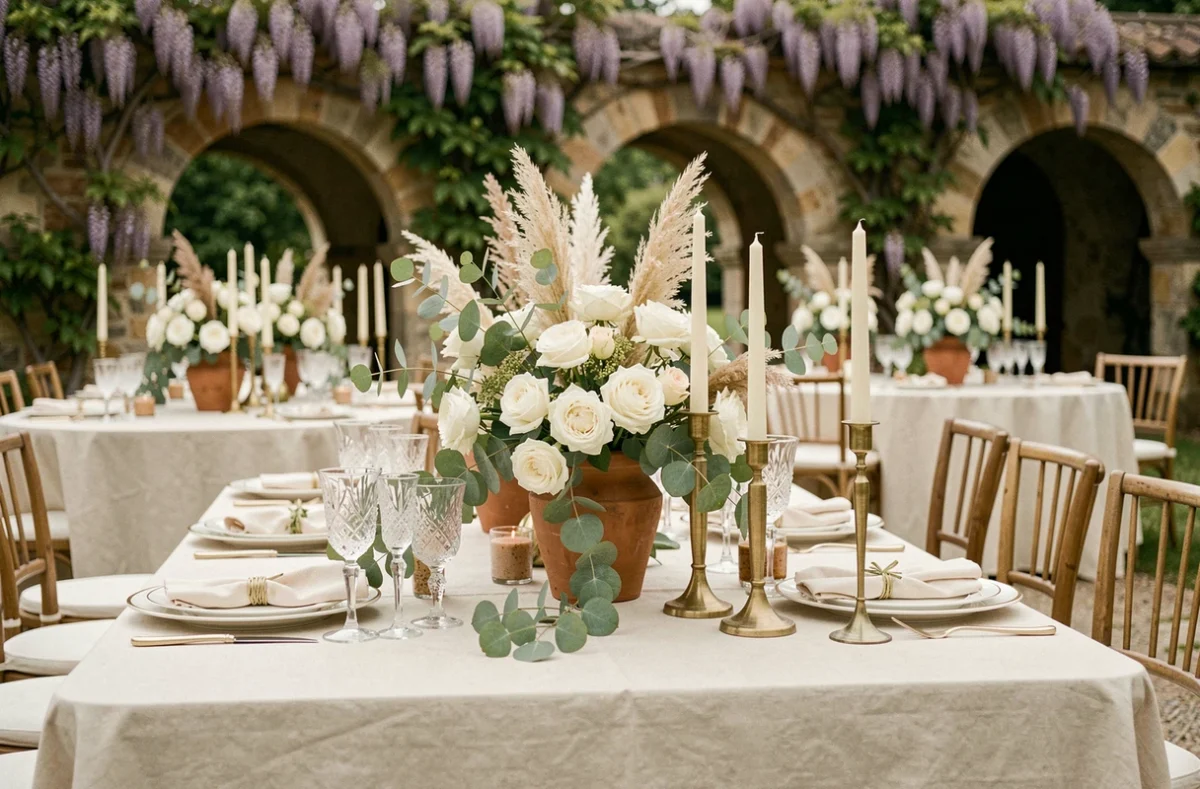
Whether the décor complies with the venue’s regulations will determine everything that follows. Before choosing a color palette or floral style, ask the venue manager for a list of restrictions: ERP classification, hanging capacity, access to electrical outlets, and setup time limits. Skipping this step could mean having materials rejected on setup day, with no way to appeal.
ERP requirements and the fire performance of decorative elements
In a venue open to the public, hanging drapes, sheers, and decorative textiles are subject to fire performance requirements that vary depending on the type of décor and the venue. Unfireproofed polyester draping may be rejected by the venue’s safety officer, even if the vendor has already delivered it.
We recommend sending the venue manager the technical specifications for fabrics and materials before placing any orders. The same question applies to floral arches with unfinished wooden frames: solid untreated wood does not have the same classification as particleboard.
In practice, this means choosing naturally low-flammability materials (heavy linen, dense cotton) or certified textiles. Low-voltage LED string lights are accepted almost everywhere, but open-flame candles are the most common sticking point. Many venues ban them or require them to be enclosed in something like a glass lantern.
Reception color palette and lighting: test them at the venue
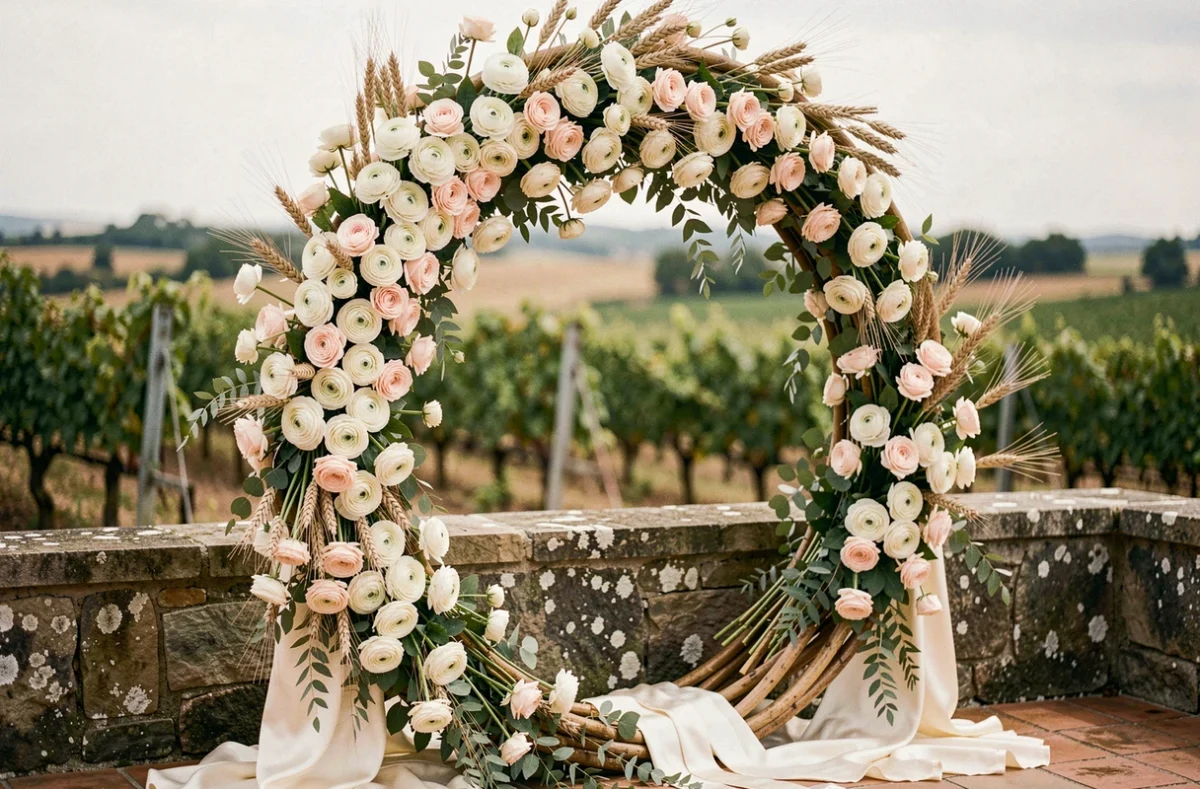
A palette chosen in natural light, on a screen, or in a showroom can look radically different under the reception venue’s lighting. Cool white fluorescent lights can make rosy blush tones look gray. Warm tungsten lighting intensifies orange tones and washes out pastels.
The only reliable approach is to bring fabric swatches (tablecloth, napkin, ribbon) and a test bouquet to the venue at the time the reception is scheduled to take place. If the venue offers a lighting test with the DJ or lighting technician, this is the time to choose between amber spotlights, filament string lights, and LED candles.
Here are a few guidelines for creating a cohesive palette:
- Limit the décor to a maximum of three colors (one dominant, one secondary, and one metallic or neutral accent) to avoid visual clutter in photos.
- Choose flowers that hold their color for several hours out of water, such as roses, carnations, and orchids, rather than hydrangeas, which wilt quickly in warm conditions.
- Check how tablecloths and runners look under the venue’s artificial lighting, not just outdoors.
Table linens have as much impact on the overall look as the flowers. For useful inspiration when comparing styles and accessories, the décor section on Esprit Mariage lets you explore color and material combinations before visiting a showroom.
Reusing floral arrangements: the practicalities of moving them from the ceremony to the reception
Moving ceremony arrangements to the reception venue seems like a sensible idea on paper. In practice, the labor involved in taking them down and setting them up again reduces the expected savings. You need to allow time to dismantle them, transport them in a suitable vehicle (not a hot trunk), keep them hydrated in the meantime, and reinstall them—all during cocktail hour.
Florists generally charge for this as a separate service. Before committing to this option, ask for the exact price and compare it with the cost of a second, simpler set of arrangements for the reception.
Alternatives that make reuse easier
Potted plants (dwarf olive trees, rosemary topiaries, ferns) are easy to transport without worrying about hydration and can later be given to guests or used to decorate a patio. They also withstand heat better than cut flowers.
Arrangements in floral foam set in self-contained vessels (stoneware bowls, wooden crates) can be moved as a single unit. The florist won’t need to repackage each stem.
Outdoor setup and heat management for vendors
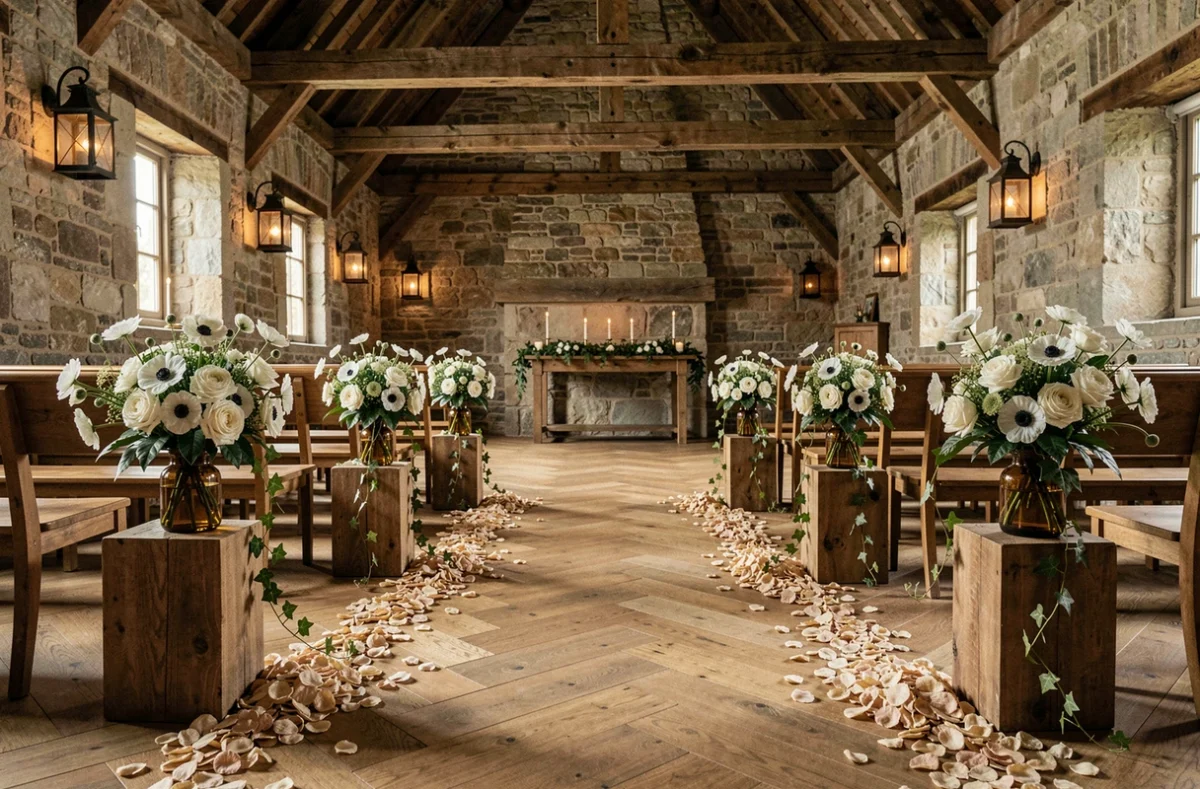
An outdoor summer wedding means thinking about the comfort of the teams setting up the décor, not just the guests. Workplace regulations require preventive measures to protect workers from heat, including risk assessments and appropriate precautions during periods of intense heat.
For the couple planning the wedding, this means:
- Schedule setup for early morning or late afternoon, avoiding the hottest hours.
- Check that the venue provides vendors with access to drinking water and a shaded area during setup.
- Choose decorative elements that can withstand the heat: avoid wax, chocolate, and butter-based arrangements on outdoor tables exposed to direct sunlight.
Metal arches heat up in the sun and can scorch flower stems that touch them. A layer of foliage (eucalyptus, ivy) between the frame and the flowers helps prevent this. Satin ribbons melt less quickly than those made from fine synthetic organza—a detail that matters on very hot days.
Décor budget: balancing visual impact and logistics
Décor often accounts for a substantial share of the overall budget. A common mistake is to add lots of small details (elaborate place cards, complex centerpieces, a decorated photo booth) that cost little individually but take up time and money when you add up the logistics of transporting, setting up, and collecting them.
Three high-impact features are better than fifteen scattered accessories. A large installation suspended above the head table, a greenery wall behind the ceremony area, and carefully planned lighting are enough to transform a venue. The rest (candles, small vases, confetti) can be added without needing a dedicated vendor.
To make sure everything is collected after the event, assign someone to oversee teardown and make a list of every borrowed or rented item. Reusable items (lanterns, vases, frames) are easy to resell on wedding-focused secondhand platforms, helping recoup some of the initial investment.
The most successful décor is the kind that works with the venue rather than against it. A château doesn’t need extra draping, while a rustic stone barn is often best left uncluttered, with just a few well-placed lights. Working with what’s already there reduces costs and creates a more cohesive result than adding décor that doesn’t suit the space.