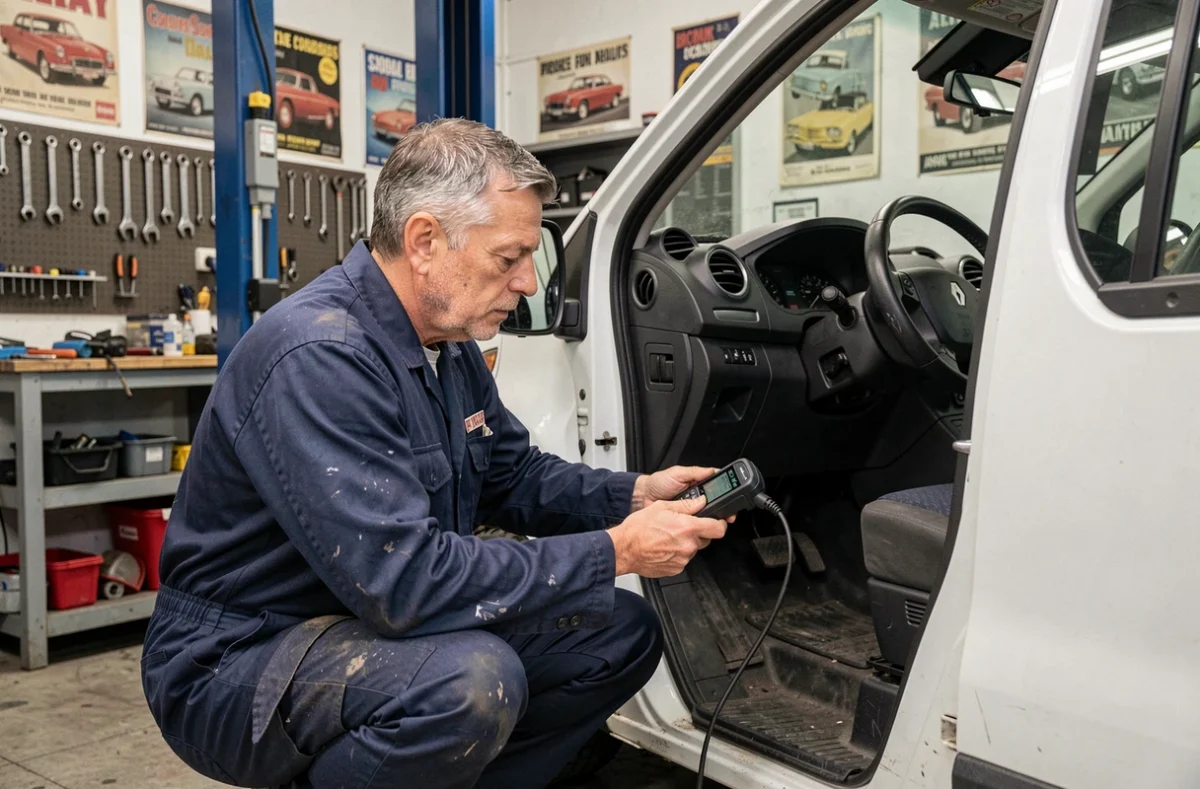
A Renault Trafic 3 with a 1.6 dCi engine displaying “check anti-pollution system” without any loss of power, while the oil level rises instead of falling: this is the classic scenario behind fault code DTC253F29. Equivalent to OBD code P253F, this fault indicates that fuel is diluting the engine oil. Independent mechanics encounter it regularly on the Trafic III and have developed diagnostic approaches that differ from the standard response at dealerships.
Dilution sensor and ECU algorithm: what the Trafic 3 actually measures
The Trafic III does not have a physical sensor that analyzes the oil’s composition in real time. The engine control unit estimates dilution using an algorithm that cross-references several parameters: the number of DPF regenerations performed, the mileage since the last oil change, trip duration and post-injection data.
In practical terms, code DTC253F29 can come on even when the oil is not actually diluted. If the oil-change counter was not reset correctly during servicing, or if several regenerations were interrupted in a row, the algorithm triggers the fault as a precaution. Independent garages check this first, and it can sometimes prevent unnecessary repairs.
For more information about code DTC253F29 on the Renault Trafic 3, feedback from mechanics who deal with this fault every day offers further insight into the procedures to follow.
Laboratory oil analysis remains the only way to confirm actual dilution. Some garages send off a sample before deciding what to do, which costs little and avoids replacing parts that are still in good condition.
DPF regeneration on the Trafic 1.6 dCi: why forcing it is not always the right move
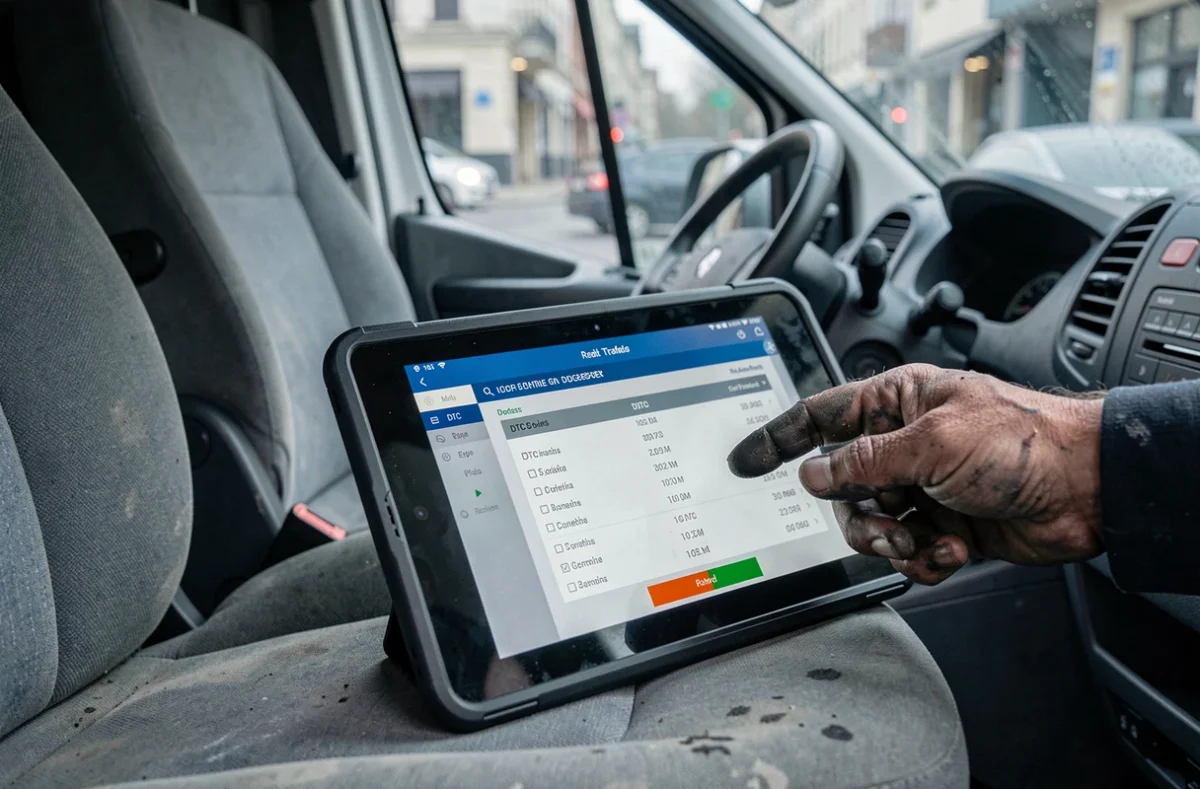
A common reaction to DTC253F29 is to connect a diagnostic tool and start a forced diesel particulate filter regeneration. On paper, it seems logical: burn off the accumulated soot and start afresh. In practice, several conditions must be met before carrying out this procedure.
- The oil level must be checked and, if necessary, brought back to normal with an oil change. Forcing a regeneration with heavily diluted oil raises the temperature in the crankcase and can damage the piston rings.
- Any other active faults must be identified and addressed first. A faulty exhaust temperature sensor or an injector leaking during post-injection will make regeneration ineffective, or even counterproductive.
- The distinction between soot and ash in the DPF makes all the difference: regeneration burns soot, but accumulated ash remains in the filter and does not disappear. A DPF heavily loaded with ash needs specialist cleaning or replacement.
Posts on specialist forums show that some Trafic III owners have successfully completed a forced regeneration, only to find that code DTC253F29 still will not clear. This is a documented issue: on some Renault engine control unit versions, only a software update can permanently clear this fault.
ECU update: dealership or independent diagnostic tool
The technical support line of at least one diagnostic tool manufacturer (Autel, according to a garage report) confirms that DTC253F29 is a known fault that requires a dealership visit for an update. Independent garages with tools compatible with the Renault protocol can sometimes perform this procedure, but software availability varies depending on the equipment.
The cost of this dealership update generally amounts to one hour of labor plus the diagnostic fee. Prices vary from one dealership to another, so it is worth requesting a detailed quote before booking an appointment.
Diagnosing code P253F: checks to carry out before considering engine replacement
Some garages recommend replacing the engine as soon as they read the code. Experienced independent mechanics follow a more methodical procedure, ruling out simple causes before considering the worst-case scenario.
The first step is to physically check the oil level on the dipstick. A level well above the maximum mark confirms that fuel is entering the crankcase. If the level is normal, the likely cause is an algorithmic fault related to the oil-change counter or the accumulation of interrupted regenerations.
Next, live data from the diagnostic tool can be used to check the exhaust temperature sensor readings and injector behavior during post-injection. An injector that does not close properly continues to send fuel into the cylinder after combustion, directly contributing to oil dilution.
How the Trafic 3 is used can make the problem worse
The Trafic III is often used for urban deliveries or trips to construction sites, involving frequent short journeys. This type of use leads to repeated attempts at DPF regeneration that never finish, because the engine does not reach the required temperature for long enough. The fuel injected during post-injection does not burn and runs down into the crankcase.
A roughly 20-minute motorway drive at a steady speed after each oil change helps the ECU complete a full regeneration. It is not a permanent fix, but garages that recommend an appropriate drive after servicing report fewer recurrences of the fault on Trafic vans used in the city.
Oil change and reset on the Trafic III: the procedure that prevents the fault from returning
An oil change alone is not enough to turn off the warning light. After the oil is replaced, the ECU needs the dilution counter to be reset. Without this reset, the algorithm continues accumulating old data and the fault returns, sometimes immediately.
The procedure recommended by independent mechanics who regularly deal with this code on the Trafic 1.6 dCi is:
- Carry out a complete oil change using oil that meets Renault’s specifications, including the required viscosity and manufacturer standard.
- Reset both the oil-change counter and the dilution counter using a diagnostic tool—not just the dashboard menu.
- Clear code DTC253F29, then take a sufficiently long test drive to allow a full DPF regeneration.
- Check for faults again after the test drive: if the code does not return, the problem is resolved. If it does, investigate a hardware fault (injector, sensor).
What varies from one Trafic to another is the ECU software version: on versions predating certain Renault updates, the code can only be cleared at a dealership, even after a successful oil change and regeneration.
Trafic 3 owners dealing with DTC253F29 should therefore consider visiting an independent garage with the right equipment before resigning themselves to an expensive quote. In most documented cases, an oil change followed by a proper reset and a completed regeneration resolves the problem without any work on the engine.