
1,200 euros difference to wash a sheet: the amount displayed on a washing machine label says nothing about its long-term performance or the quality of the laundry that comes out. The savings promised by some models often pale in comparison once the water and electricity bills are on the table. A “cheap” device at purchase can quickly become a burden on the wallet if its consumption wasn’t considered from the start.
Behind the numbers, each machine tells a different story: drum volume, motor durability, finishes, variety of programs, lifespan… For a family of four, it’s essential to aim accurately if you hope to combine user comfort with long-term cost control.
Understanding the price gap and the different models on the market
Navigating the washing machine market is anything but simple. The options are overwhelming, and each model claims its reason for being. Prices, sometimes ranging from simple to triple, are explained much more by the overall sturdiness of the machine than by a few extra gadgets.
In most French households, the front-loading washing machine stands out as the reference: capacity ranging from 5 to 14 kg, standard width of 60 cm, installation possible under a countertop or stacked with a dryer. This versatility particularly appeals to those who want to avoid unpleasant surprises over time.
In apartments or cramped bathrooms, the top-loading washing machine (40 to 46 cm wide) saves the day, with a maximum capacity of 8 kg. The compact models (or slim), designed for studios or small spaces, accept 4 to 6 kg of laundry, but be careful, user comfort and energy savings often suffer. At the other end of the spectrum, the “big size” versions (12 to 15 kg) cater to large families or those sharing their housing in a flatshare.
For those who want to wash and dry with the same appliance, the washer-dryer combines both functions. Convenient, of course, but it inflates the initial bill and increases water and electricity consumption, especially if drying is used frequently.
Before investing, it’s imperative to accurately estimate your needs: what volume of laundry each week, what space constraints, and what criteria are non-negotiable? To avoid unpleasant surprises, take the time to choose your washing machine wisely. The balance between purchase cost and usage expenses is established at this stage.
What criteria for a family of 4?
When living as four under one roof, the drum size is not a detail: anticipating the amount of laundry to handle, from everyday items to sheets, requires aiming for a capacity of 8 to 10 kg. This is enough to limit trips to the bathroom… without fearing to overload the machine with each load.
Another strategic point: the spin speed. Between 1200 and 1400 revolutions per minute, you save time on drying and avoid soaking wet clothes. But if the washing machine is installed near the living area, opting for models that do not exceed 55 dB during washing ensures a bit of peace in the house, even during laundry time.
On the energy side, the bill matters: aiming for an A or B class reduces the electricity bill year after year. The label now also includes the reparability and durability index (rated out of 10): the closer it is to 10, the more the machine promises to last for years without unpleasant surprises.
Look into the variety of programs: cotton, wool, synthetic, delicate, as well as the eco 40-60 cycle, which optimizes consumption. Inverter motors, quiet and durable, provide real comfort. Finally, to limit microplastics, some models already come with a microfiber filter to capture unwanted particles.
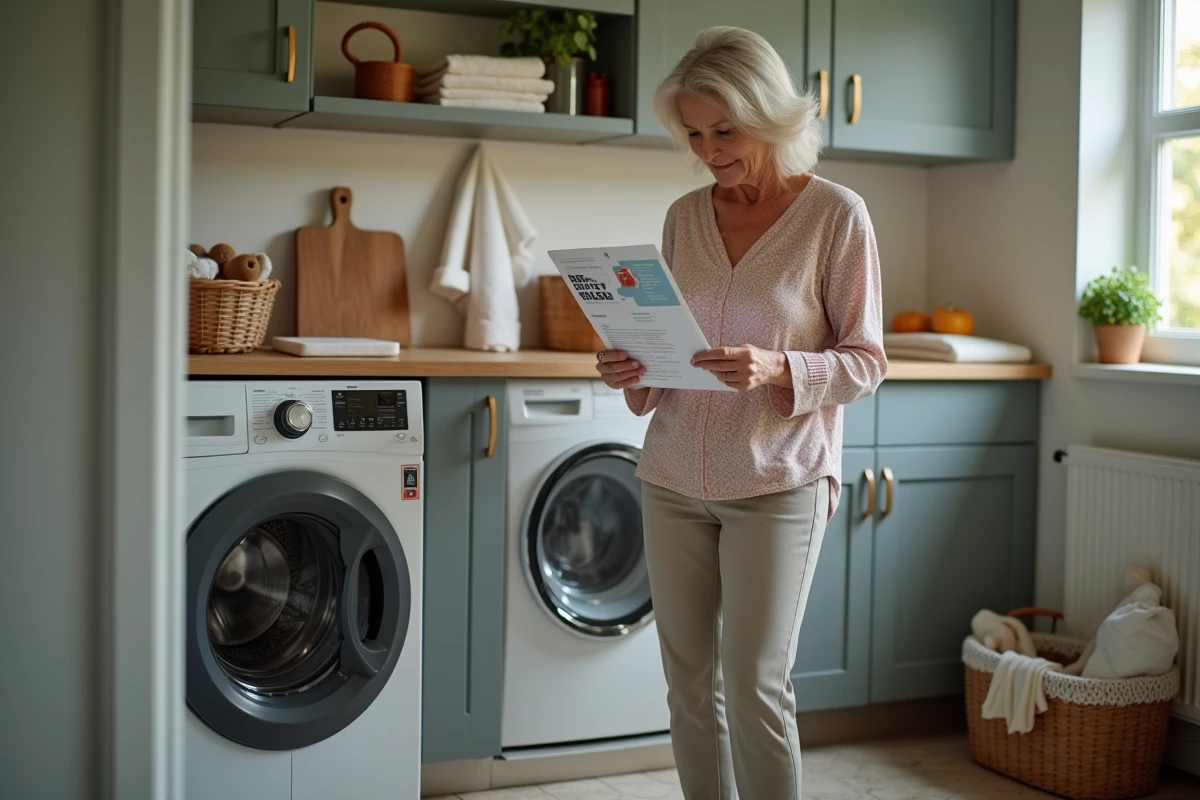
Smart comparator: tips for selecting and buying without regret
Reading between the lines: indicators to watch and real performance
Some criteria clearly make a difference in daily use. Before pulling out your credit card, check carefully:
- The reparability and durability index (score out of 10, available on the product sheet): aim for 7 or more for a device capable of lasting and easy repairs
- The announced energy class: prefer A or B to control water and electricity costs in the medium term
- The annual water and electricity consumption, visible at purchase, which gives a concrete indication of the model’s impact
Space, needs, and usage: properly align installation and maintenance
Anticipation avoids disappointments. A front-loading model easily fits under a countertop if its top plate is removable. In a small bathroom, the top loader (narrower) can free up space. To avoid waste, adapt the drum size to weekly laundry: too large, it will consume unnecessarily.
Maintaining your machine to extend its lifespan
Some simple actions are necessary to preserve efficiency and delay breakdowns:
- Regularly clean the detergent drawer and the seal
- Empty the filter every month
- Run a drain every 30 days to avoid blockages
Manufacturers are starting to respond to ecological expectations by integrating microfiber filters, which limit pollution related to microplastics released into the water. Also, consider checking the availability of spare parts, information that is now often accessible on the product sheet.
A washing machine should not be chosen lightly; it is part of the ordinary for the years to come. Making the right bet means counting on clean laundry and uncompromised cycles: simplicity, sturdiness, and the assurance of a daily life without unpleasant surprises.