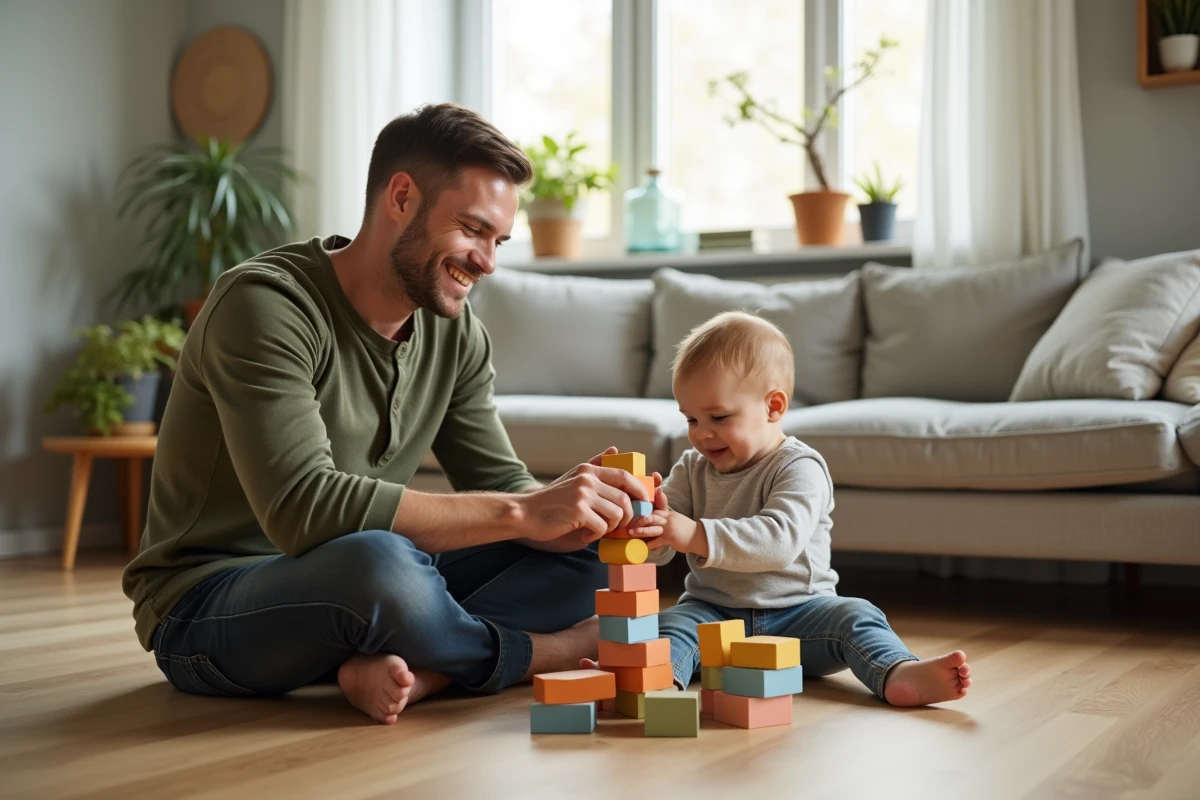
Fatherhood is not determined in the first few weeks. Most of the content available online focuses on birth and the very first days, as if the father’s role freezes after returning from maternity. The real stakes of fatherhood emerge later, when routines crack, mental load sets in, and family configurations evolve.
Paternal mental load: what changes after the first months
We observe a clear gap between the editorial coverage of the topic and the reality experienced by fathers. Guides for “young dads” address diaper changing, baby wearing, and skin-to-skin contact. After the six-month mark, resources become scarce while the issues become more complex.
Returning to work reshuffles the cards. The father who had found his rhythm during parental leave must renegotiate his place in the domestic organization. Recent research on paternal involvement emphasizes daily presence and concrete equality in caregiving, not just a supportive role.
In practical terms, the paternal mental load covers tasks that are rarely named: medical follow-ups (vaccinations, pediatric appointments), childcare management, meal planning, coordination with daycare or the nanny. As long as these tasks remain invisible in the discourse on fatherhood, they remain unevenly distributed. Specialized resources like the Mister Papa website aggregate articles that go beyond the “newborn” phase to address these substantive issues.

Co-parenting in separated or blended contexts: an overlooked angle
Articles on modern fatherhood almost always assume a stable couple under the same roof. This representation excludes a growing number of fathers who fulfill their role in different configurations: shared custody, blended families, long-distance parenting.
Separated co-parenting requires specific organizational skills. Managing two child-friendly homes, maintaining educational consistency between two households, and communicating effectively with the other parent without informal daily channels: these constraints deserve precise answers, not generalities about “the importance of communication.”
Recurring friction points in shared custody
- The transfer of practical information (ongoing medical treatments, homework, extracurricular activities) requires a reliable shared tool, whether it’s a dedicated app or a digital communication notebook
- The setup of the second home must provide a real personal space for the child, not just a makeshift bed in a living room, or it risks undermining the sense of stability
- Holidays, vacations, and school events become zones of ongoing negotiation that require a calendar planned several months in advance
We recommend that fathers in co-parenting situations formalize practical agreements in writing. A clear framework reduces misunderstandings and protects the parent-child relationship from adult tensions.
Equipment and ergonomics of daily fatherhood
Topics related to useful equipment are gradually shifting from lifestyle articles to the concrete concerns of fathers. The baby-wearing market, for example, has long targeted mothers exclusively. Physiological baby carriers in extended sizes have multiplied, with adjustable harnesses for larger male builds.
The diaper bag has followed the same trajectory. Models designed to resemble a classic urban backpack meet a real demand: a father should not have to choose between functionality and appearance when going out alone with his child.
Selection criteria that really matter
Three parameters deserve special attention when choosing childcare equipment used by fathers:
- The adjustability range of straps and harnesses, which must cover a variety of body types without compromising the child’s physiological support
- The empty weight of the item, often overlooked in comparisons, as it directly affects the duration of comfortable use
- Compatibility with multimodal travel (public transport, cargo bike, urban walking), because equipment that only adapts to the car excludes part of daily use
Positive education and fatherhood: beyond the discourse
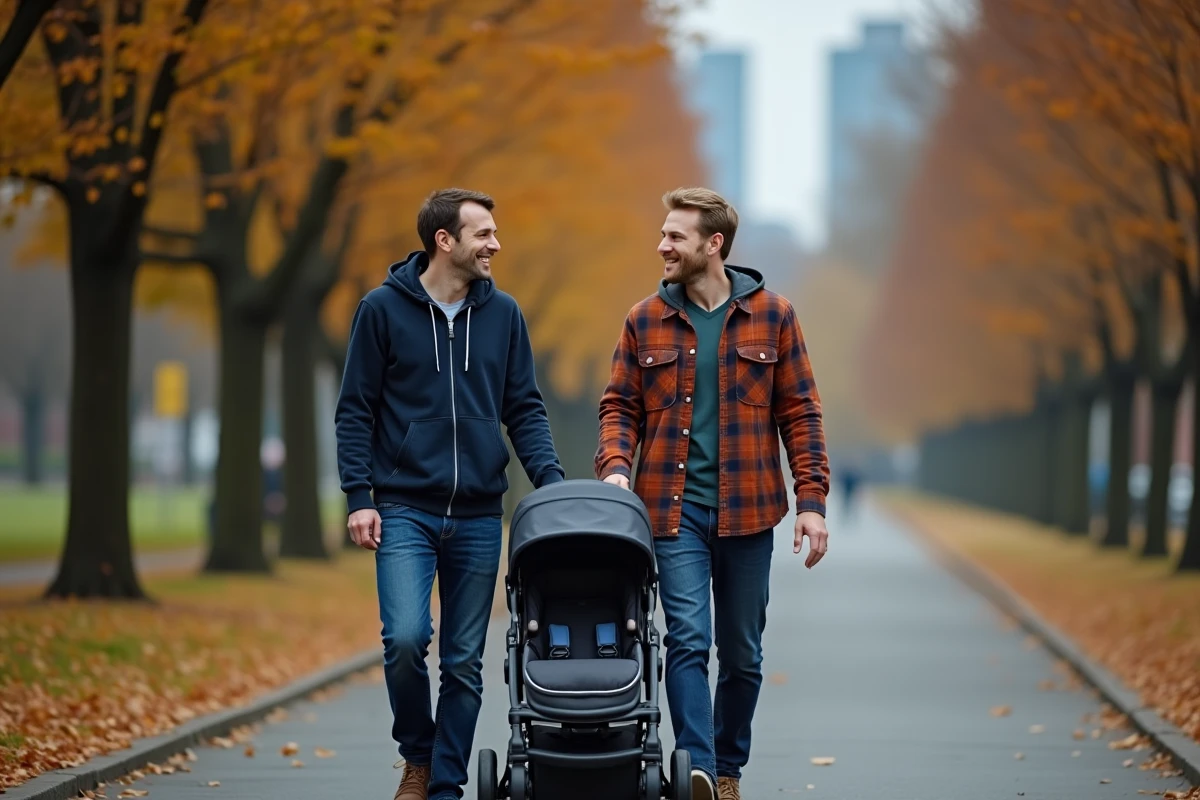
Positive education has become an omnipresent keyword in parenting content. When applied to fatherhood, it encounters a rarely articulated paradox: the educational models passed down to men of the previous generation largely relied on direct authority and punishment.
Deconstructing an inherited educational reflex requires conscious and repeated effort. Positive parenting is not about removing limits, but about setting a framework without resorting to intimidation. For a father who did not receive this model, each interaction can become a micro-learning opportunity.
The most effective tools remain the simplest: naming the child’s emotion before correcting behavior, offering a choice between two acceptable options rather than a single order, and accepting that the adult’s emotional regulation precedes that of the child.
Fatherhood and mental health
Parental fatigue affects fathers as much as mothers, but it remains underreported. Signs of paternal burnout (increased irritability, social withdrawal, loss of interest in usual activities) often go unnoticed because the dominant discourse still associates parental burnout with the maternal role.
Consulting a mental health professional is not an admission of failure, it is a legitimate parenting skill. Peer support groups for fathers, still rare in France, constitute a complementary resource to break isolation.
Modern fatherhood is neither limited to extended parental leave nor to an ergonomic baby carrier. It is built over time, through daily adjustments that are not covered in any birth guide. Fathers seeking concrete answers after the “newborn” phase need content that reflects this reality, not yet another reminder of the importance of skin-to-skin contact.