Some children sleep less than eight hours without showing the slightest sign of fatigue at school. Others demand the same rituals every evening, under threat of a meltdown, while their brother or sister does just fine without them. No method guarantees a perfect balance within the household; each family organization relies on ongoing adjustments.
The most relevant recommendations are forged through observations and adjustments. Forget about magic formulas. Each family adopts its own markers based on the moment, the collective mood, and the surprises of daily life.
Why family routine is a valuable ally for parents and children
Routine in family life is less about constraint and more about a point of reference. It frames the day: waking up, meals, homework, bedtime. These regular appointments mark the time, soothe the child, and support the parent. It’s not about setting the schedule in stone, but about providing a form of predictability that liberates. The child anticipates what comes next, becomes an actor, tests, learns. Gradually, they take ownership of their autonomy and develop self-confidence, far from an automated way of functioning.
The balance is there. The adult sets boundaries without rigidity, welcomes emotions rather than imposing silence, values mutual support, and emphasizes effort more than the final result. Once well established, the routine allows kindness to flow at the heart of the home. Here, the parent adjusts, supports, and builds emotional security, without ever falling into minute-by-minute control.
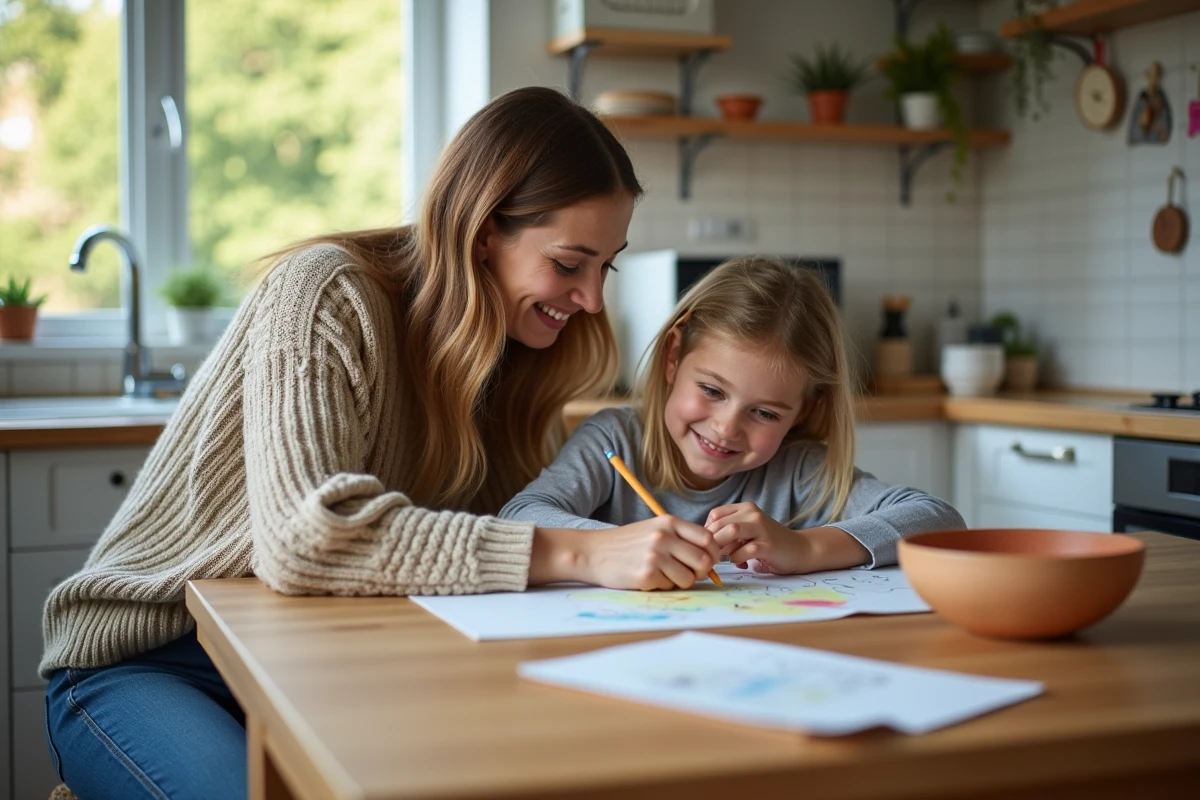
Gradually entrusting tasks to their child, such as getting the bread, tidying up their things, or preparing their bag, nurtures a sense of usefulness and competence. This is a solid foundation on which academic motivation rests. The child dares, tries, retries, and the example set by adults often weighs more than words.
To discover more insights from gentle parenting or positive education, simply visit the Mister Papa website. This resource will enrich the family’s daily toolkit and open up new concrete avenues to experiment with without dogmatism.
What small changes can transform daily family life?
Family well-being does not bloom overnight. It evolves at the pace of sometimes discreet but essential micro-adjustments. Putting the right words to emotions, encouraging a gesture, valuing effort: these repeated actions gently transform the relationship between parents and children.
Here are several simple levers to test for establishing a calm family dynamic:
- Set aside exclusive speaking time in the evening: ten minutes away from screens, where everyone shares a significant moment from their day. This appointment prioritizes listening and mutual recognition.
- Empower according to age: setting the table, watering plants, crossing off an item on the shopping list. With each progress, the child’s confidence grows, and their initiative increases.
- Introduce shared family moments: cooperative games, cooking together, or nature exploration. These moments create memories and bond the family.
As for motivation at school, it also arises at home. Supporting an exercise, acknowledging perseverance, showing that one learns from mistakes as much as from success opens the way to self-esteem. Far from demands for perfection, parental attention illuminates the path for the developing student. Rules regarding screens find their balance in dialogue and mutual trust: setting times, explaining reasons, involving the child in the discussion.
Educational guides or family podcasts can provide inspiration, but real change is woven into the routine through ordinary, adapted choices that create an atmosphere and gradually shape the family dynamic.

Concrete tips for establishing a balanced and fulfilling routine
Building a clear routine opens up a space for your child where they feel safe, where the day’s sequences no longer feel like a race but rather a journey of trust. Each morning, repeating the same sequences—waking up, washing up, having breakfast—invites the child to integrate the rhythm and become more autonomous, sometimes without even realizing it.
The Montessori pedagogy inspires here: offering age-appropriate tasks, allowing the child to put away their shoes, participate in preparing the home, or choose their clothes nurtures their confidence and sense of belonging. In the afternoon, returning home becomes a familiar sequence: snack, roundtable about the day, possible homework, then games or quiet time before dinner. Professionals like Aurélie Callet, psychologist, or Claire Mainguy, speech therapist, emphasize the importance of naming emotions, especially at bedtime. Knowing how to welcome fears or value efforts, through consistency, builds lasting kindness.
There is no universal routine: everyone adjusts over time. Tools from positive education, visual weekly planners, autonomy charts, illustrated evening rituals can help clarify, empower the child, and smooth family life. The routine, far from being rigid, becomes a launching pad for everyone’s development.
Ultimately, the secret lies in the art of assembling and reinventing daily markers that bring everyone together. When routine embraces life, the whole household benefits: it is a foundation, but certainly not a routine that renders one immobile.