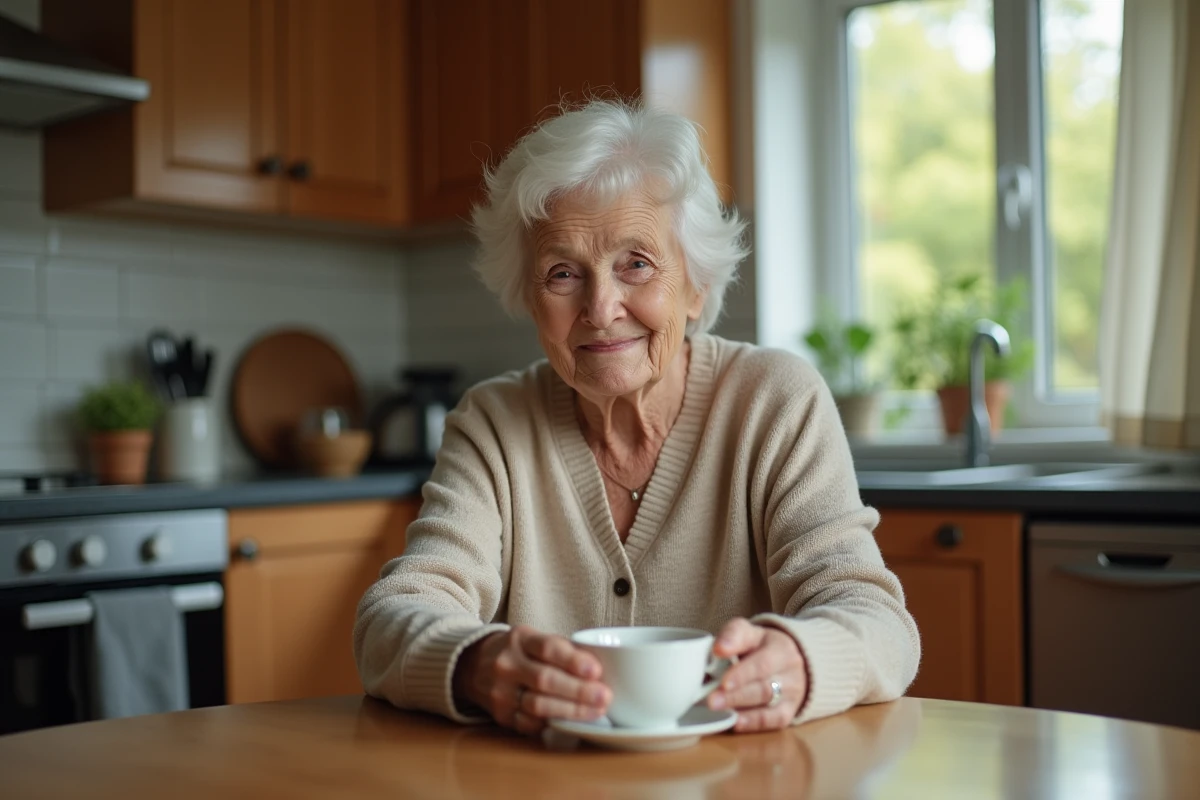
An elderly person who slows down their walking, loses weight for no apparent reason, or becomes fatigued after climbing a few steps is not simply aging. These signals, often trivialized by those around them, can reveal a state of vulnerability well identified in geriatrics. The frailty syndrome in the elderly refers to a decrease in physiological reserves that makes the body unable to cope with even minor stress: a flu, a heatwave, a minor fall.
Understanding this syndrome is primarily about identifying the window of action that exists before the loss of autonomy. Because frailty is not a point of no return.
Heatwave and frailty: an underestimated accelerator
Classic medical content readily lists chronic diseases as drivers of frailty. They overlook an increasingly documented factor of decompensation: heatwaves. Santé publique France has emphasized for several summers the need for proactive identification of fragile elderly individuals during periods of extreme heat.
Have you ever noticed that an elderly parent seems more confused or drowsy during a heatwave? This is not trivial. Unusual drowsiness and decreased fluid intake are early signals, sometimes visible even before the person feels thirsty. In a body whose reserves are already depleted, dehydration is enough to trigger a cascade: confusion, falls, hospitalization, loss of mobility.
The problem is that these climatic episodes act as a brutal revealer. A person in a state of pre-frailty, who was still managing daily life, can shift to established frailty in just a few days. Systematic home visits during heat peaks are now recommended by health authorities, precisely to identify the frailty syndrome in the elderly before it complicates.
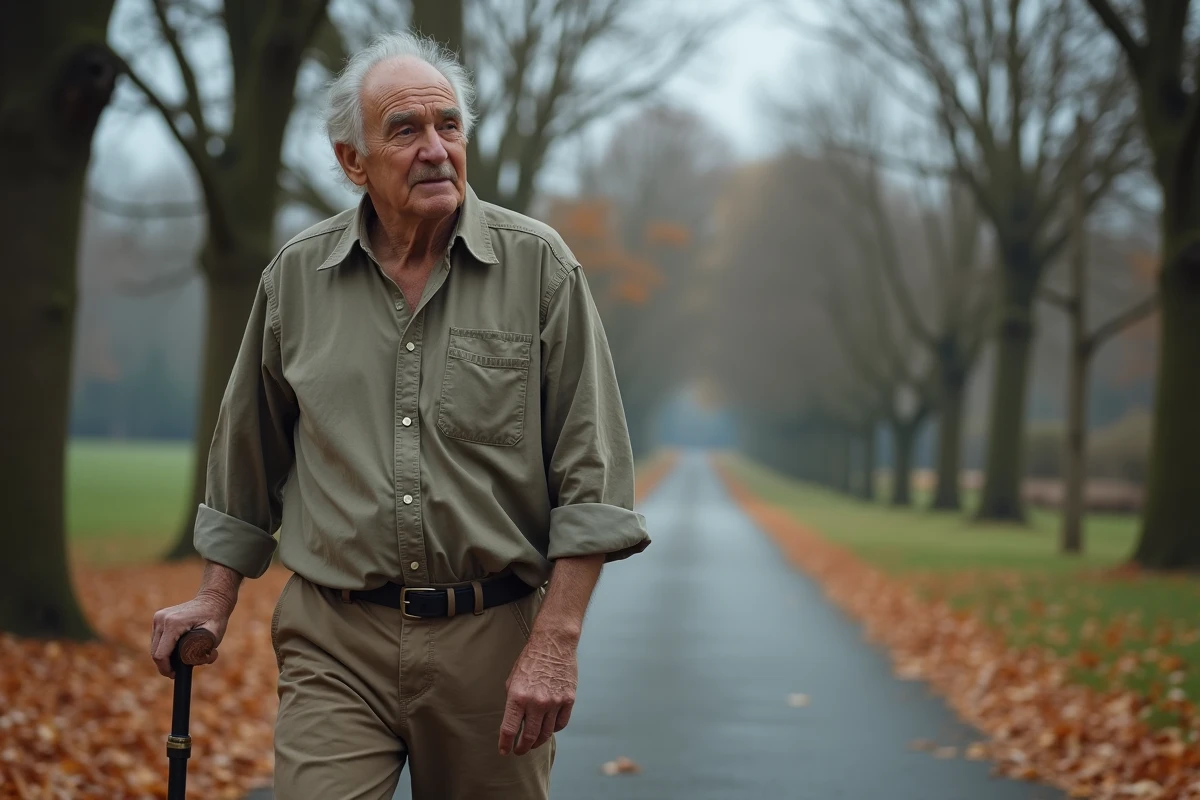
Clinical signs of frailty according to Fried’s criteria
The most commonly used scale in geriatrics for diagnosing frailty is based on five criteria defined by researcher Linda Fried. It does not measure a disease, but a global state of the organism.
- Involuntary weight loss: a gradual loss of weight without dieting or identified illness. Muscle mass decreases, not just fat.
- Perceived fatigue: the person reports exhaustion for activities they performed without difficulty a few months earlier.
- Slowed walking: the speed of movement decreases measurably, an indicator that family doctors can assess during consultations.
- Muscle weakness: grip strength (measured by a dynamometer) declines. In practice, opening a jar or getting up from a chair becomes difficult.
- Reduced physical activity: outings become rarer, movements are limited to within the home.
Three out of five criteria are sufficient to qualify the state of frailty. One or two criteria indicate pre-frailty, a stage where intervention remains most effective. Frailty is a continuum, not a sudden shift.
Slowed walking: the most accessible marker
Among these five criteria, walking speed stands out for its simplicity of evaluation. A doctor, physiotherapist, or even a caregiver can observe the time taken to cover a few meters. A slowed walk alone predicts an increased risk of falls and hospitalization. It is an alert signal that can be exploited without sophisticated equipment, directly at home or in the office.
Causes of frailty: beyond natural aging
Aging alone does not explain frailty. Some individuals over 85 remain robust, while others decline as early as 70. Several factors accumulate and interact.
Sarcopenia, which refers to the progressive loss of muscle mass and strength, forms the physical foundation of the syndrome. It accelerates in cases of prolonged immobilization (hospitalization, bed rest after a fall) and nutritional deficiencies, particularly insufficient protein intake.
Complex chronic diseases play an amplifying role. Heart failure and chronic obstructive pulmonary disease are frequently associated with frailty. Chronic low-grade inflammation, present in these conditions, silently erodes physiological reserves over several years.
Psychological and social factors weigh as heavily as biological causes. Isolation reduces cognitive and physical stimulation. Depression, often underdiagnosed in seniors, decreases appetite and motivation to move. A vicious cycle sets in: less activity, more muscle loss, more fatigue.

Prevention of frailty: concrete levers that work
Frailty is considered a potentially reversible stage preceding the loss of autonomy. This reversibility is the central point: acting at the pre-frailty stage radically changes the trajectory.
Adapted physical activity: the best-documented lever
Physical exercise is the primary recommendation, and by far the most supported. It is not about intensive sports but about tailored programs combining muscle strengthening, balance work, and regular walking. The national anti-fall plan for the elderly, led by the Ministry of Health and the Minister Delegate for Autonomy, prioritizes physical activity to reduce disabling falls among those aged 65 and older.
Protein-rich nutrition and weight monitoring
Inadequate protein intake slows sarcopenia. In practice, this means at least one source of protein at each meal (meat, fish, eggs, legumes, dairy products). Monitoring weight each month allows for the detection of abnormal loss before it worsens.
Home modifications and proactive identification
The national anti-fall plan also includes concrete actions beyond exercise:
- Home modifications: removal of slippery rugs, installation of grab bars, lighting of nighttime passage areas.
- Technical aids: walker, tele-assistance to alert in case of a fall.
- Targeted home visits: during heatwaves or after hospitalization, to reassess the person’s condition.
These measures are not about comfort but about active prevention. They target specific situations where frailty transforms into loss of autonomy.
Early detection remains key. The French Society of Geriatrics and Gerontology has launched a screening program for frailty described as unprecedented, aimed at identifying at-risk individuals before the first serious fall or the first avoidable hospitalization. The primary care physician, family members, and home professionals are the links in this detection, provided they know what to observe: slowing down, weight loss, withdrawal.