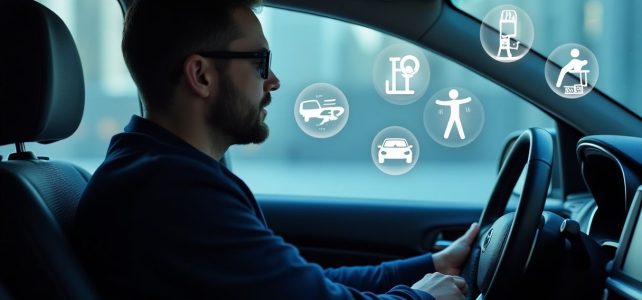
In the face of growing challenges in road safety and the need to ensure that every driver is able to take the wheel safely, the psychotechnical test for the license appears as a determining tool. For some, it is merely a formality to complete. For others, it is a real rite of passage that raises questions and apprehensions. Its function is to assess the cognitive and psychomotor abilities of drivers, ensuring that they are capable of reacting appropriately to driving situations.
What is a psychotechnical test for the license?
The psychotechnical test license is an evaluation aimed at testing various skills and competencies necessary for driving. It is often required for drivers who have committed serious offenses or had their licenses suspended. This test seeks to ensure that those who return to driving do so safely.
Typical challenges of this test include:
- Assessment of reflexes: Measuring reaction speed to various stimuli is essential to prevent accidents.
- Concentration tests: Ensuring that the driver can maintain attention over an extended period, properly processing crucial information.
- Analysis of motor coordination: Ensuring perfect synchronization of movements, essential for controlling the vehicle.
These challenges are generally conducted on a computer and require adequate preparation to maximize the chances of success.
Why is the psychotechnical test required?
When a driver commits a serious offense or has their license revoked for medical reasons, the psychotechnical test license often becomes a prerequisite for recovering their driving license. This preventive measure aims to reduce the risks of recidivism by ensuring that the driver possesses the necessary skills for safe driving.
The main reasons for the application of this test include:
- Restoring road safety by minimizing the risks of accidents caused by unfit drivers.
- Providing an objective assessment of the driver’s cognitive abilities, often impaired by medical conditions or dangerous behaviors.
- Preventing recidivism by ensuring that drivers who have lost their licenses return to the road with confidence and safety.
These tests, although mandatory in some cases, are also there to reassure society about the reliability of each driver.
How does a psychotechnical test take place?
Taking a psychotechnical test for the license can be intimidating. However, understanding how it unfolds can help in better preparation. Candidates are often welcomed in accredited centers where the test is administered by professionals. They undergo several challenges, each designed to assess different aspects of their driving ability.
The typical process includes:
- A preliminary interview to understand the context and history of the candidate.
- Computer-based exercises testing reflexes, attention, and coordination.
- An analysis of the results by a professional, who provides an opinion on the candidate’s fitness to resume driving.
Although standardized, each center may have slightly different methods, but the goal remains the same: to ensure a comprehensive evaluation of the skills necessary for safe driving.
How to effectively prepare for the test?
Preparation for a psychotechnical test is essential to maximize the chances of success. Candidates can choose to practice through various means, including online training or courses provided by specialized organizations.
Some tips for optimal preparation include:
- Regularly practicing online exercises that simulate the tests.
- Participating in counseling sessions with experts.
- Maintaining a good lifestyle to optimize concentration and reactivity.
Regularity and rigor in preparation can make all the difference when it comes to passing this test successfully.