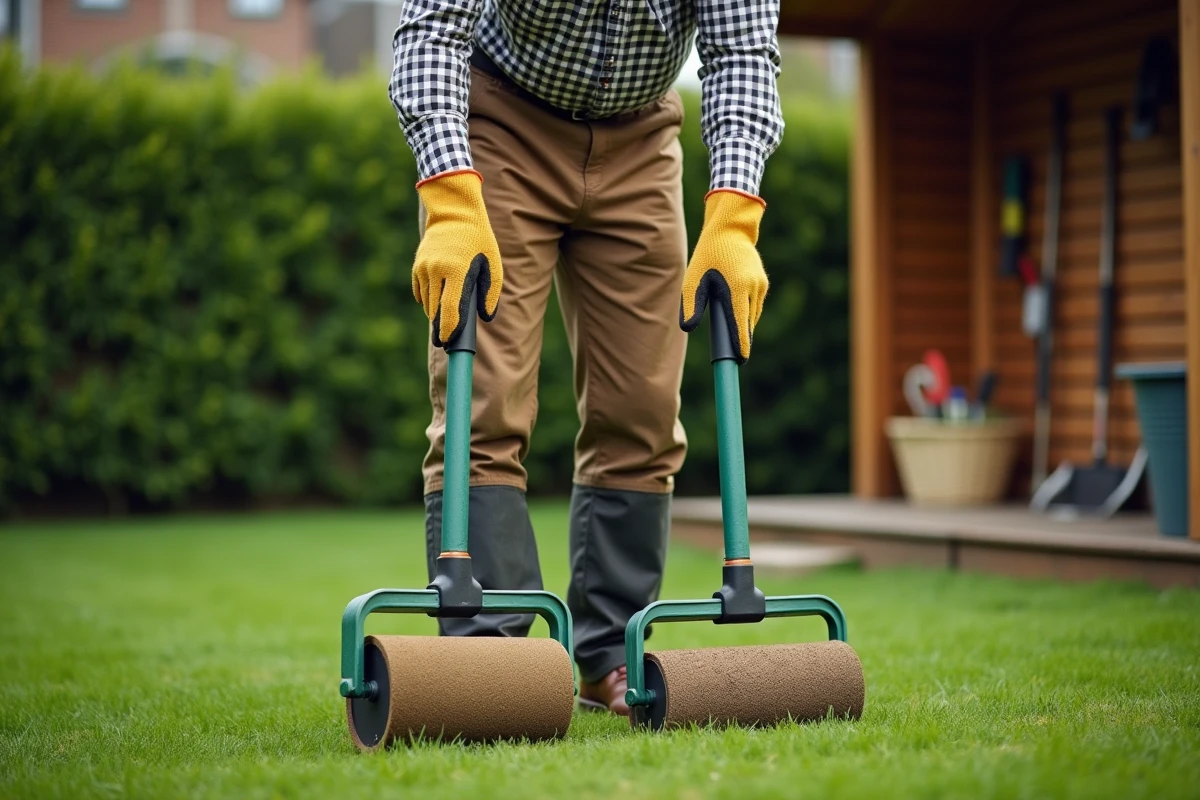
A 10 kg lawn roller doesn’t correct much; 120 kg can destroy young roots: the scene is set. The market is full of models, from galvanized steel to fillable plastic, but few truly guide the choice according to the soil, the season, or the type of grass. For some, adjustments should be made based on moisture or seed density; for others, a single guideline suffices. Opinions abound, often contradictory, and in the end, the tool shapes the success of a beautiful lawn, whether simple or trendy with sod.
Natural or synthetic grass: understanding the differences to get started
Choosing between natural grass or synthetic grass first involves considering the effort one is willing to put in. The former requires patience, method, and vigilance: selecting grasses, monitoring the soil, adapting to the weather. Seeding or sod requires precise actions and a dose of consistency for a regular and dense carpet. Even with ready-to-lay grass, rooting requires care; no step should be overlooked.
Synthetic grass, on the other hand, is unaffected by the weather or fertilization discrepancies. It adapts to almost any surface, whether a concrete terrace or poor soil. But beware of poorly prepared terrain: even the slightest flaw will become visible. Before each installation, rolling is essential to level the base and ensure a clean finish. The promise of a flawless lawn largely depends on the quality of the initial leveling.
The challenge is to find the right balance. If too light, the roller leaves bumps and air pockets that disrupt the future lawn. If too heavy, it hinders rooting from the first shoot. Choosing the right weight of a lawn roller becomes crucial: it must be adapted to the season, soil type, and technique (seeding, sod, synthetic) to establish a dense and uniform carpet that will last over time.
What weight to choose for a lawn roller based on your type of lawn and needs?
No two terrains are alike, and the weight of the lawn roller must always fit the situation. Weighted, water-filled, or sand-filled models cover the entire range: from the fine touch of 30 kg to the firm weight of 120 kg. But how to decide on the weight for your specific case?
To find your way, consider the soil and the stage of the project. Here are some useful guidelines for choosing without regret:
- Clay or compacted soil requires at least 60 kg for a well-levelled and stable surface.
- In the presence of sandy soil or a lighter substrate, staying under 50 kg prevents suffocating young roots.
At the time of seeding, around 40 kg keeps the soil in place without excessive compaction. For laying sod or slabs, 60 to 80 kg ensure a uniform root-soil contact, limiting air pockets and promoting recovery.
In practice, adjust according to the configuration found on the ground:
- Newly worked soil, young lawn: 30 to 40 kg is sufficient to start the installation while respecting soil life.
- Laying rolls or renovation: choose 60 to 80 kg for a perfect fit without excess pressure.
- Already stabilized and hard soil: up to 120 kg, but only in this case, to level without damage.
Don’t forget that the width of the roller reduces the number of trips back and forth and the consistency of the work, and that a well-designed handle literally changes the comfort of use. Weighted models are versatile: adjust the load according to moisture and season, and manage the operation from spring to autumn without ever losing control over the lawn.
Practical tips for successful installation and maintenance, from roller choice to recommended suppliers
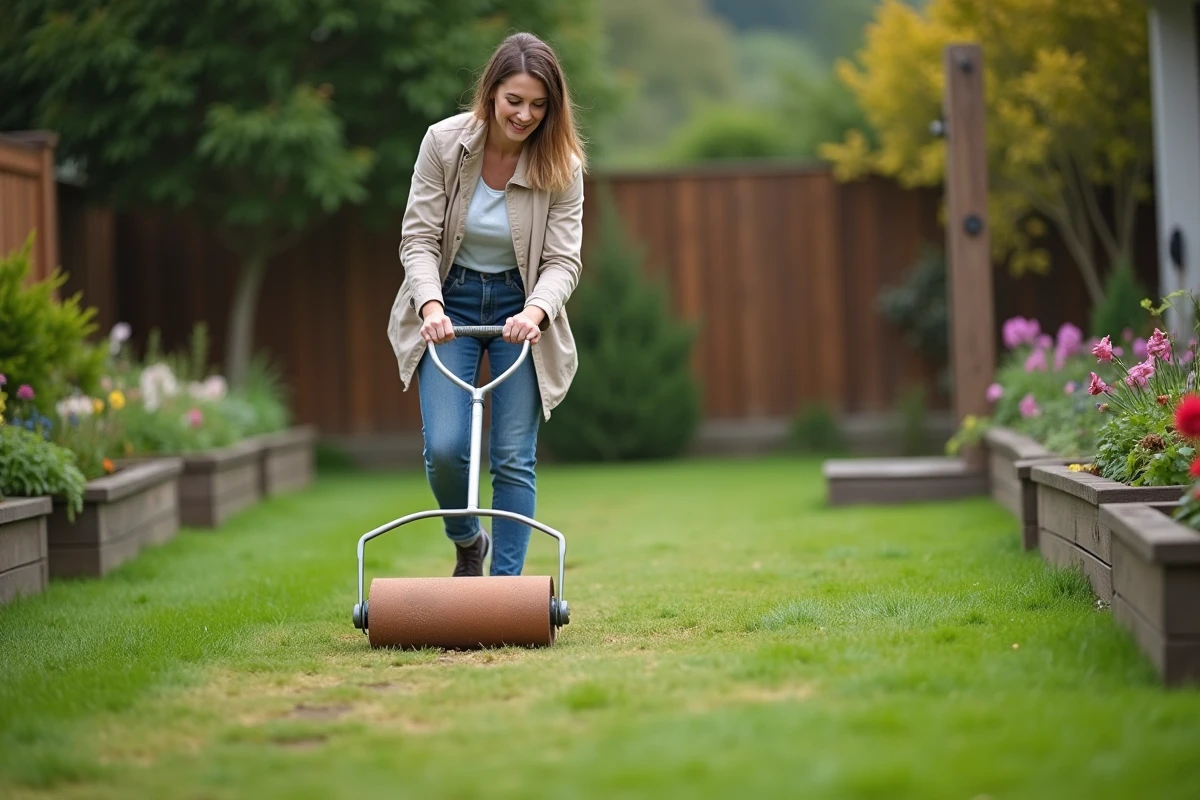
The lawn roller is not a gadget reserved for purists: it plays a role at every stage, from freshly seeded soil to spring renovation. The only rule: a level, clean terrain, free of any root or pesky stone. Once the installation is complete, multiple cross passes are made to achieve a flat surface ready to receive, whether it’s seed, sod, or even synthetic.
Maintenance doesn’t stop at installation. Over the seasons, as the weather softens, a pass with a manual scarifier aerates the soil, preventing the lawn from suffocating under thatch. Watering should remain measured: enough to encourage rooting, not too much to spare the seedlings. During hot weather, it’s better to leave the soil and grass alone, prefer a raised mowing, and space out the rolling. A bit of compost or natural fertilizer stimulates growth and density without shocking the soil.
For equipment, galvanized steel has proven itself season after season. A solid roller simplifies each step and is usefully accompanied by a good scarifying rake or a small roller compatible with mowers to refine maintenance over the months. For those seeking reliability, some specialists like laptitegraine.fr advise, deliver, and assist in the choice, with concrete attention to the constraints of the terrain and weather.
A successful lawn reveals itself in the details: under a foot that sinks just right, under a consistently smooth surface, one can sense the sure hand, the well-chosen roller, and the rewarding patience. It is this demand that ultimately makes the real difference.